Showing posts with label Entertainment. Show all posts
Showing posts with label Entertainment. Show all posts
Wednesday, 21 August 2013

Saturday, 27 July 2013
Kenya Special's Musical History Lesson
 |
| The African Eagles Band (aka The Eagles Lupopo), who feature on Kenyan Special. Photograph: Soundway Records |
Driving north from Nairobi on the new super-highway, the
Kilimambogo hills rises slowly ahead of us. My travel companion is
Emmanuel Mwendwa, who has spent the past two years researching,
licencing, collecting old photos and writing liner notes for the Kenya Special compilation recently released by Soundway Records.
Emmanuel talks about this intriguing archaeological music venture, described in a Guardian review as a "fabulously entertaining history lesson", and the challenges in tracking down the musicians featured on the anthology. He managed to find almost all of them, or their families, with the exception of the much-fabled Slim Ali of the Hodi Boys band. Rumour has it that Ali is somewhere in the Emirates, but not even his relatives are sure.

We are heading to Thika to meet one of the musicians Emmanuel did locate, the legendary Daniel Kamau Mwai, or just DK as he is popularly known. DK has three tracks on the Kenya Special collection and is also featured on the cover of the anthology. He tells me the cover photo was taken at a concert at the Bata Shoe Company in Limuru in 1979. His extraordinary sideburns were already his trademark then and 34 years later they still impress.
The compilation also
highlights the unique and innovative relationship between Kenyan,
Congolese, Zambian and Tanzanian musicians in this period when the
finest bands of especially DR Congo (then Zaire) performed and even
settled in Nairobi. But both DK and Emmanuel emphasise that Kenya
Special is only scratching the surface. There are many more musical
treasures to be rediscovered in Kenya.
We are meeting DK at the Blue Post Hotel – Thika's grand old lady located where the Chania and Tahika rivers meet to form the twin Thika and Chania Falls. The hotel's history dates back to 1908 where it was built as a stopover for the white settlers living further north and travelling back and forth to Nairobi. DK has performed at the Blue Post numerous times, the last being the night his mother died in 2011. Today the music coming out of the hotel radio is 80s US pop, and DK and Emmanuel grumble about radio stations stifling the growth of indigenous music as DJs demand higher and higher payments to give songs airplay.
Today is the 31 May 2013, and it has been exactly half a century since DK first time took the stage on 1 June 1963, the day known in Kenya as Madaraka – when the country attained internal self-rule from the UK, preceding the full independence in December the same year. DK explains how everybody on Madaraka day was drunk from a full day of celebrations. His three older brothers were supposed to play a concert in their hometown of Gatanga, a few miles from Thika, but none of them were in a condition to perform. Instead 15-year-old DK took the stage and played to the surprise of everybody present. "I had been watching my brothers play, and when they were out of the house I used to take one of their guitars and practice without them knowing about it. They had told me to focus on my school, not to play music," he says.
DK describes his music as mix of benga and rumba. In
the introduction to Kenya Special, Doug Paterson describes how benga,
Kenya's unique contribution to Afro-pop, spread from its Luo origins
near Lake Victoria to the rest of the country in the late 60s and early
70s. Soon bands throughout the country were playing their own versions.
The Kalambya Boys' Kivelenge song feature on Kenya Special being a great
sample of Kamba benga while the DK and Lulus Band tracks represent the
Kikuyu benga. DK is often credited for having made the Kikuyu benga
mainstream in Kenya but as he explains to me, most of the benga groups
actually had broad appeal: ''There was no tribal music in the 60s and
70s. Kikuyus bought Luo music and Luos bought Kikuyu music. Tribal music
was created under (former Kenyan president Daniel arap) Moi."
In 1970 DK started his own record label DK Undugu Sound (undugu meaning brotherhood in Swahili), releasing both his own hit records with The Lulus Band (earlier known as The Lulus Trio Boys and later the DK Lulus Band) as well as many other musicians. The same year he also opened his own music shop located on River Road, the musical heart of Kenya which Emmanuel refers to as the Motown of Nairobi at the time, hosting endless numbers of music shops and studios.
DK ran the music shop for decades but finally closed it in 2011 due to increasing rents and persistent music piracy. Piracy has been hurting DK and many other Kenyan musicians for decades. "The 70s were really the golden years of Kenyan music. In the 80s the music piracy increased with introduction of cheap cassettes to the local market. The tapes were copied in Uganda and then sold cheaply in Kenya. We tried lowering our prices but the pirates just decreased theirs even further. We just could not compete with them," he says.
In the late 70s DK and his companions took their fight against piracy to Nigeria. "A lot of Kenyan music was sold in Nigeria but most Kenyan musicians never received any money from it. So we went there to try and find out who was importing and distributing it." Their mission failed and after a few weeks in Nigeria they had to flee the country as the authorities were threatening to arrest them. But they did manage to see Fela Kuti perform at his legendary Shrine club in Lagos. DK was later invited to the US and Europe to perform on several occasions but never managed to get the necessary visas.
He also got into trouble with the authorities in Kenya. Although his lyrics tackled many political issues, it was his love songs rather than his political ones that got him into dire straits. A few of his hits, including the Nana track featured on Kenya Special, were banned by the state-controlled radio station for containing "obscene" lyrics. Another song called Muriki (meaning "coming together" in Kikuyu) was also banned. "I had to go to Voice of Kenya to convince them to play it. This was really an era of missionary and there was much censorship," DK says.
During the years, DK has served both the political and musical interests of his home town. From 1979 to 1992 he was the county representative of Gatanga and he has been the chairman of Gatanga Music Promoters for years and helped launch the careers of many young local musicians. But he says more support is needed from the government: "We need support to create proper recording facilities and we need the government to start taking actions against the music pirates."
Both Emmanuel and DK emphasise that although young Kenyans generally are mostly interested in foreign music, some of them are starting to rediscover the rich musical heritage of their homeland. And DK definitely sees a role for himself in a future renaissance of Kenyan music. His DK Undugu Sound label closed down years ago but he still runs the DK Wamaria production company and he hopes to soon open a new music shop in Thika. "I have so much more music to give to this world," he says.
Emmanuel talks about this intriguing archaeological music venture, described in a Guardian review as a "fabulously entertaining history lesson", and the challenges in tracking down the musicians featured on the anthology. He managed to find almost all of them, or their families, with the exception of the much-fabled Slim Ali of the Hodi Boys band. Rumour has it that Ali is somewhere in the Emirates, but not even his relatives are sure.
We are heading to Thika to meet one of the musicians Emmanuel did locate, the legendary Daniel Kamau Mwai, or just DK as he is popularly known. DK has three tracks on the Kenya Special collection and is also featured on the cover of the anthology. He tells me the cover photo was taken at a concert at the Bata Shoe Company in Limuru in 1979. His extraordinary sideburns were already his trademark then and 34 years later they still impress.
The Nairobi melting pot
"Kenya has always had one of the most diverse and intoxicating musical cultures in Africa. Yet the immense talent is rarely acknowledged internationally and seldom given the resources it needs to flourish," writes Doug Paterson in the Rough Guide's world music bible. The Kenyan music heritage has far from received the same kind of attention that has been directed towards vintage Ethiopian, Congolese and west African music in the past decade. That is until now, at least, as Kenya Special does an incredible effort in documenting a golden era in Kenyan music during the 60s and 70s. |
| DK Mawi (second left) with fellow musicians and his car in the 1970s. "I wasted a lot of money on cars in those days," DK says. Photograph: Fusion Magazine archives |
We are meeting DK at the Blue Post Hotel – Thika's grand old lady located where the Chania and Tahika rivers meet to form the twin Thika and Chania Falls. The hotel's history dates back to 1908 where it was built as a stopover for the white settlers living further north and travelling back and forth to Nairobi. DK has performed at the Blue Post numerous times, the last being the night his mother died in 2011. Today the music coming out of the hotel radio is 80s US pop, and DK and Emmanuel grumble about radio stations stifling the growth of indigenous music as DJs demand higher and higher payments to give songs airplay.
Today is the 31 May 2013, and it has been exactly half a century since DK first time took the stage on 1 June 1963, the day known in Kenya as Madaraka – when the country attained internal self-rule from the UK, preceding the full independence in December the same year. DK explains how everybody on Madaraka day was drunk from a full day of celebrations. His three older brothers were supposed to play a concert in their hometown of Gatanga, a few miles from Thika, but none of them were in a condition to perform. Instead 15-year-old DK took the stage and played to the surprise of everybody present. "I had been watching my brothers play, and when they were out of the house I used to take one of their guitars and practice without them knowing about it. They had told me to focus on my school, not to play music," he says.
Making benga mainstream
After his improvised debut, DK continued playing in the villages around Thika, although it was another five years before he released his first recordings. He had written a letter to the state-run Kenya Broadcasting Corporation (then known as Voice of Kenya) who referred him to the renowned producer David Amunga, who agreed to record and release his music. Amunga only paid his artists pennies, something that made him unpopular among many musicians of the time. However, DK carries no hard feelings. "I respected him. He played an important part in making me DK," he says. |
| Slim Ali and friends in the studio. Photograph: Soundway Records |
In 1970 DK started his own record label DK Undugu Sound (undugu meaning brotherhood in Swahili), releasing both his own hit records with The Lulus Band (earlier known as The Lulus Trio Boys and later the DK Lulus Band) as well as many other musicians. The same year he also opened his own music shop located on River Road, the musical heart of Kenya which Emmanuel refers to as the Motown of Nairobi at the time, hosting endless numbers of music shops and studios.
DK ran the music shop for decades but finally closed it in 2011 due to increasing rents and persistent music piracy. Piracy has been hurting DK and many other Kenyan musicians for decades. "The 70s were really the golden years of Kenyan music. In the 80s the music piracy increased with introduction of cheap cassettes to the local market. The tapes were copied in Uganda and then sold cheaply in Kenya. We tried lowering our prices but the pirates just decreased theirs even further. We just could not compete with them," he says.
In the late 70s DK and his companions took their fight against piracy to Nigeria. "A lot of Kenyan music was sold in Nigeria but most Kenyan musicians never received any money from it. So we went there to try and find out who was importing and distributing it." Their mission failed and after a few weeks in Nigeria they had to flee the country as the authorities were threatening to arrest them. But they did manage to see Fela Kuti perform at his legendary Shrine club in Lagos. DK was later invited to the US and Europe to perform on several occasions but never managed to get the necessary visas.
He also got into trouble with the authorities in Kenya. Although his lyrics tackled many political issues, it was his love songs rather than his political ones that got him into dire straits. A few of his hits, including the Nana track featured on Kenya Special, were banned by the state-controlled radio station for containing "obscene" lyrics. Another song called Muriki (meaning "coming together" in Kikuyu) was also banned. "I had to go to Voice of Kenya to convince them to play it. This was really an era of missionary and there was much censorship," DK says.
 |
| DK Mwai and Emmanuel Mwendwa in 2013. Photograph: Andreas Hansen |
The Gatanga servant
After lunch at the Blue Post we drive to Gatanga, DK's home turf and the cradle of Kikuyu music. Many of the finest Kikuyu musicians originate from Gatanga and, as Emmanuel tells me, the small town still has the highest density of musicians anywhere in Kenya. DK was born in Gatanga and never really left. The proximity to Nairobi enabled him to keep his home in Gatanga while spending most of his time in Nairobi.During the years, DK has served both the political and musical interests of his home town. From 1979 to 1992 he was the county representative of Gatanga and he has been the chairman of Gatanga Music Promoters for years and helped launch the careers of many young local musicians. But he says more support is needed from the government: "We need support to create proper recording facilities and we need the government to start taking actions against the music pirates."
Both Emmanuel and DK emphasise that although young Kenyans generally are mostly interested in foreign music, some of them are starting to rediscover the rich musical heritage of their homeland. And DK definitely sees a role for himself in a future renaissance of Kenyan music. His DK Undugu Sound label closed down years ago but he still runs the DK Wamaria production company and he hopes to soon open a new music shop in Thika. "I have so much more music to give to this world," he says.
Monday, 24 December 2012
Gospel Artist Paul Mwai Tours the UK

On the 28th December 2012
With great demand, Paul Mwai, gospel artist from Kenya, incorporation with friends of Reading, will perform once again great worship and praises to usher new year 2012, at Wycliffe Baptist Church
233 Kings Road
Reading. RG1 4LS on
28/12/12 from 18:00-22:00. Entry is free. Invite a friend.
With great demand, Paul Mwai, gospel artist from Kenya, incorporation with friends of Reading, will perform once again great worship and praises to usher new year 2012, at Wycliffe Baptist Church
233 Kings Road
Reading. RG1 4LS on
28/12/12 from 18:00-22:00. Entry is free. Invite a friend.
Oxford, on the 5th of January 2013
Renowned
gospel singer from Kenya Paul Mwai will be in Oxford, on the 5th of
January at 6pm till late at Christian Life Centre, The Regal OX4 2AF.
Come and usher the new year in Gods presence. CD 's and VCD's available
on the night together with the opportunity to take professional pictures
with Paul Mwai on the night. Entry fee £10 and £5 for Nyama Choma.
Friday, 9 November 2012
Gangster Movie Kenya's First Oscar Contender
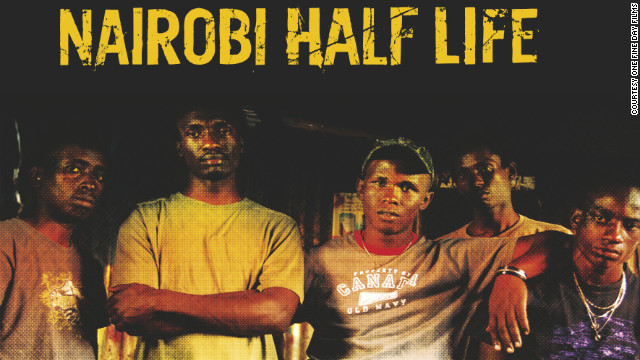 |
| Kenyan movie Nairobi Half Life examines gang culture and crime in the Kenyan capital. |
(CNN) -- A hard-hitting Kenyan movie about gang culture has become the country's first-ever film to be considered for an Oscar.
"Nairobi Half Life" has
just been shown at Film Africa 2012, which is currently taking place in
London -- having already made history as the most successful theatrical
release for a local film in Kenya, according to its producers.
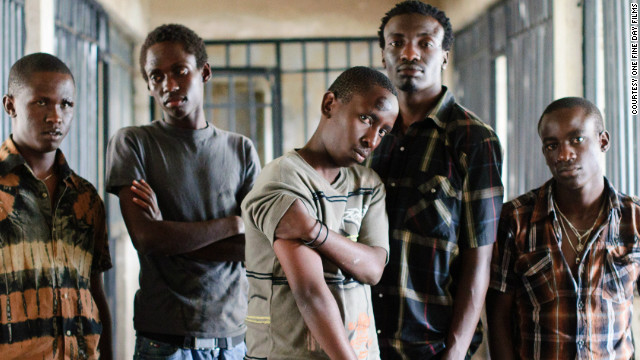 |
| Some of the cast of Nairobi Half Life, Kenya's first-ever film to be considered for an Oscar. |
It's the debut film from Kenyan director David "Tosh" Gitonga, who says he wants to change views about crime in the country.
"We keep saying crime is
wrong, but are we really looking at why there is crime?" he says. "I
don't believe Kenyans get into crime for fun and giggles."
This experience led him to hear stories of gang members flooding
properties and defecating on porches after robberies. He was told: "It
hurts us that you have these things we don't have."
 |
| Left to right :
Olwenya Maina, who plays Oti in Nairobi Half Life, and director Tosh
Gitonga, at the film's German premiere in Berlin on October 10. Gitonga says he wants to change views about crime in Kenya. |
This experience led him
to hear stories of gang members flooding properties and defecating on
porches after robberies. He was told: "It hurts us that you have these
things we don't have."
Gitonga admits he was left speechless when asked whether it's fair that
some are born into wealth, while others struggle to feed their children
just one meal a day.
"I couldn't answer that question and it still haunts me today," he says.
His film chronicles the
trials and tribulations of the character Mwas -- a young aspiring actor
from rural Kenya who dreams of becoming the next "Bruce Willis."
Mwas moves to Nairobi in
pursuit of that dream -- but experiences first-hand why some people
refer to the city as "Nairobbery," after being robbed of all his
belongings on his first day there.
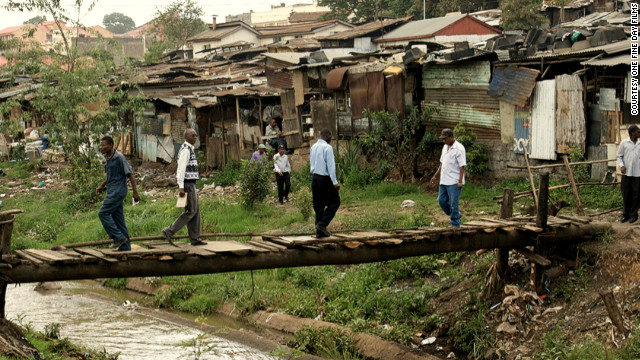 |
| Crime is especially high in Nairobi, according to the U.S. State Department. It estimates the city averages about 10 vehicle hijackings each day. |
Fighting to survive in
the city, Mwas strikes up an unlikely friendship with a gang leader who
introduces him to a world of theft and violence. This includes taking
part in robberies and carjackings -- common crimes in Nairobi.
According to the U.S. State Department, the city averages about 10 vehicle hijackings each day.
Jitin Mediratta, a Nairobi-born lawyer, describes the movie as a story that hits home.
"I have been a victim of
robbery with violence when I was living with my father a few years
ago," he says. "The truth about the thugs being young and nervous when
carrying out the crimes is indeed true."
While Mediratta says the
film "humanizes" the gangsters, he rejects feeling any empathy for them
-- an opinion shared by his wife Isha, who adds: "A crime is still a
crime."
He does, however, want to know how the Kenyan government plans to improve the situation and tackle social injustices.
It is a sentiment shared
by Gitonga. He hopes the film will help government officials understand
what is happening on the ground, even if just a minority of them take
any action.
There hasn't been a
formal response to the film from the Kenyan government, but Gitonga says
some government officials have discreetly expressed "a need to look at
our country and make things better."
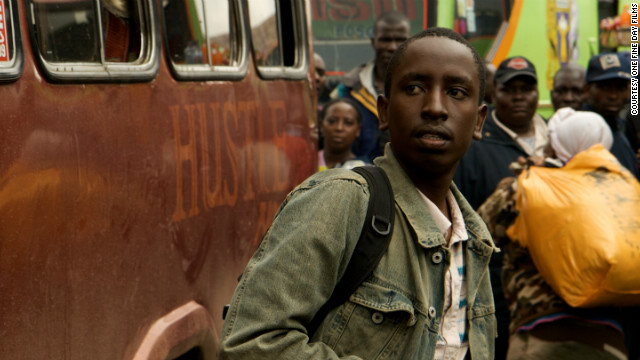 |
| Joseph Wairimu won best actor at the Durban International Film Festival for his portrayal of main character Mwas. In the movie Mwas is an aspiring actor who gets dragged into a life of crime. |
The movie has already
received international recognition. Joseph Wairimu, who plays Mwas, won
best actor at the Durban International Film Festival, in July. And the
U.S. Academy of Motion Picture Arts and Sciences is considering whether
to nominate Nairobi Half Life for an Oscar in the Best Foreign Language
Film category -- the first time a Kenyan movie has been considered.
Gitonga is also humbled
by the positive response the film has received from Kenyans, since
Kenyan movies don't usually attract large local audiences.
He feels the movie has
opened doors for other Kenyan filmmakers and African film in general. "I
want the rest of the world to go to the cinema and appreciate a world
they don't know," he says.
Friday, 12 October 2012
Voting Opened for the 2012 Kisima Awards
The 2012 Kisima Awards nominees have officially been announced,
following an exclusive cocktail launch that took place last night.
Plenty of Kenya’s artistes are set to battle it out now for what is one
of Kenya’s premier music awards events.
Leading the list of nominees is rapper Nonini, who is in contention in categories such as ‘Artiste of the Year’, ‘Video of the Year’ and ‘Hip Hop Artiste of the Year’.
The Kisima Awards were started in 1994 by producer Tedd Josiah and regularly held at the Carnivore Restaurant, but discontinued in 1997. In 2003 the Awards were revived and later expanded to include other East African artistes.
This year’s gala ceremony will take place on the 2nd of November at the Kenyatta International Conference Center in Nairobi.
Sponsors of this year’s Kisima Edition include Pulse Magazine, Nakumatt Holdings, IQ Marketing, Brand Kenya, Standard Group, True Blaq, 3 Mice and Kenya Tourist Board. The overall winner is expected to walk away with a cool Kshs. 2 million.
Interesting to note was that Daddy Owen declined the nomination via a tweet to the organizers saying he ‘doesn’t want to participate in any awards this year’.
Here’s the complete list of nominees for the 2012 Kisima Awards:
Artiste / Group of the Year:
Octopizzo
Daddy Owen
Nameless
Camp Mulla
Nonini
Video of the Year Category:
Nonini – Colour Kwa Face
Nameless – Coming Home
Daddy Owen – Mbona
Juliani – Exponential Potential
Rabbit – Swahili Shakespeare
Collaboration of the Year:
Alicio / Juliana
P-Unit / Sauti Sol
Daddy Owen / Denno
Longombas / Mr. Vegas
Keko / Madtraxx
Boomba Artiste Category:
Avril
Amileena
DNA
GrandPa Family
Habida
Prince Davis
Q Tasi
Mejja
Size 8
Hip Hop Category:
Nonini
Juliani
Octopizzo
Gospel Artiste of the Year:
Daddy Owen
Eko Dydda
Eunice Njeri
Mastar Piece
Emmy Kosgei
Willy Paul
Ragga/Reggae Category:
Longombas
Fireson
Kevo Yout
Wyre da Lovechild
Daddy Owen
Urban Artiste / Group Category:
Just a Band / Nonini
Camp Mulla
Boneless
Muthoni the Drummer Queen
Yvonne Darko
Nariki
Fusion Artistes Category:
Wahu
Anto Neosoul
Dan ‘Chizi’ Aceda
Sanaipei
Juliet
Judith Bwire
Benga Artiste of the Year:
Judith Bwire
Kamande wa Kioi
Wa Kahalf
Otieno Aloka
Wa Othaya
Vincent Ongidi
Upcoming Artiste of the Year:
Anto Neosoul
Camp Mulla
Nariki
Xtatic
Yvonne Darko
Alicio
East African Recognition:
Jackie Chandiru
TMK
Chameleone
Diamond
Lady Jay Dee / Mr. Blue
Professor Jay
Dynamiq
Through a transparent voting process the public will have an opportunity to vote for their favorite artist and music via mobile SMS and the internet and thereafter winners will be awarded during the main event.
The Voting process determines the Kisima Music Awards Winner in each Category except for the Producer of the Year, Album of the year, Lifetime Achievement and Trustee awards. A percentage of the final voting process goes to the Voting Academy and the general public which determines the Kisima Music Awards recipients (winners) after an audit by a professional firm.
Voting for the nominees will take place for a period of 7 weeks.
Register here to vote for your favourite 2012 Kisima Award nominees.
Leading the list of nominees is rapper Nonini, who is in contention in categories such as ‘Artiste of the Year’, ‘Video of the Year’ and ‘Hip Hop Artiste of the Year’.
The Kisima Awards were started in 1994 by producer Tedd Josiah and regularly held at the Carnivore Restaurant, but discontinued in 1997. In 2003 the Awards were revived and later expanded to include other East African artistes.
This year’s gala ceremony will take place on the 2nd of November at the Kenyatta International Conference Center in Nairobi.
Sponsors of this year’s Kisima Edition include Pulse Magazine, Nakumatt Holdings, IQ Marketing, Brand Kenya, Standard Group, True Blaq, 3 Mice and Kenya Tourist Board. The overall winner is expected to walk away with a cool Kshs. 2 million.
Interesting to note was that Daddy Owen declined the nomination via a tweet to the organizers saying he ‘doesn’t want to participate in any awards this year’.
Here’s the complete list of nominees for the 2012 Kisima Awards:
Artiste / Group of the Year:
Octopizzo
Daddy Owen
Nameless
Camp Mulla
Nonini
Video of the Year Category:
Nonini – Colour Kwa Face
Nameless – Coming Home
Daddy Owen – Mbona
Juliani – Exponential Potential
Rabbit – Swahili Shakespeare
Collaboration of the Year:
Alicio / Juliana
P-Unit / Sauti Sol
Daddy Owen / Denno
Longombas / Mr. Vegas
Keko / Madtraxx
Boomba Artiste Category:
Avril
Amileena
DNA
GrandPa Family
Habida
Prince Davis
Q Tasi
Mejja
Size 8
Hip Hop Category:
Nonini
Juliani
Octopizzo
Gospel Artiste of the Year:
Daddy Owen
Eko Dydda
Eunice Njeri
Mastar Piece
Emmy Kosgei
Willy Paul
Ragga/Reggae Category:
Longombas
Fireson
Kevo Yout
Wyre da Lovechild
Daddy Owen
Urban Artiste / Group Category:
Just a Band / Nonini
Camp Mulla
Boneless
Muthoni the Drummer Queen
Yvonne Darko
Nariki
Fusion Artistes Category:
Wahu
Anto Neosoul
Dan ‘Chizi’ Aceda
Sanaipei
Juliet
Judith Bwire
Benga Artiste of the Year:
Judith Bwire
Kamande wa Kioi
Wa Kahalf
Otieno Aloka
Wa Othaya
Vincent Ongidi
Upcoming Artiste of the Year:
Anto Neosoul
Camp Mulla
Nariki
Xtatic
Yvonne Darko
Alicio
East African Recognition:
Jackie Chandiru
TMK
Chameleone
Diamond
Lady Jay Dee / Mr. Blue
Professor Jay
Dynamiq
Through a transparent voting process the public will have an opportunity to vote for their favorite artist and music via mobile SMS and the internet and thereafter winners will be awarded during the main event.
The Voting process determines the Kisima Music Awards Winner in each Category except for the Producer of the Year, Album of the year, Lifetime Achievement and Trustee awards. A percentage of the final voting process goes to the Voting Academy and the general public which determines the Kisima Music Awards recipients (winners) after an audit by a professional firm.
Voting for the nominees will take place for a period of 7 weeks.
Register here to vote for your favourite 2012 Kisima Award nominees.
Thursday, 27 September 2012
Carnivore's Sam Kivelenge Aka "Dr. Dawa" Receives Long Service Award

World famous for his popular and delicious Dawa cocktails, Dr Dawa has been dispensing his uplifiting medicine with with and flair, to patrons of the Carnivore since it started.
He is seen receiving his recognition award from John Mworia, Manager Simba Saloon
Friday, 21 September 2012
Musician Choku Appears as Guest Artist at #Talk2Raila
 |
| The Prime Minister with the Artist Choku on the talk2raila session. |
Yesterday's session was not any different and singer and songwriter Choku, whose mellow voice, determination and savory persona has earned her recognition as one of the premiere female artists in the Kenyan music industry, was the guest artist at #talk2raila during which time the Prime Minister spoke to Kenyans about devolution in relation to the current Teacher's and Doctor's strike.
 Born Wambui Kimaru, Choku
(Slang for Chocolate) first made an impact in the Kenyan music scene in
2003 when she released her single “Pole” featuring Genge artiste
Juacali. She later joined the Calif Records stable, where she teamed up
with Rat-a-tat and the late Lady S to form the group Calif Angles and recorded the hit song ‘Kilio’, which earned the group a Kisima awards nomination in 2007.
Born Wambui Kimaru, Choku
(Slang for Chocolate) first made an impact in the Kenyan music scene in
2003 when she released her single “Pole” featuring Genge artiste
Juacali. She later joined the Calif Records stable, where she teamed up
with Rat-a-tat and the late Lady S to form the group Calif Angles and recorded the hit song ‘Kilio’, which earned the group a Kisima awards nomination in 2007.She later recorded the single “Vitu na like” with Rat-a tat produced by Maichblaq & the Herbalist which also earned her a second Kisima award nomination in 2008. After this, Choku decided to resume her solo music career. In 2009 she recorded and released the song “Slowride” which topped the Kenyan charts.
The new release “Haya” is a song composed and written by Choku. Haya is a Swahili word which means “shy”. The song is about a girl who is interested in a guy but she is to shy to express it.
Related : Ragga Sensation Redsan Endorses Raila for 2013
Wednesday, 19 September 2012
BBA Reunion: Goldie Visits Prezzo In Kenya
Singer Susan Harvey popularly known as
Goldie from Big Brother StarGame is in Nairobi. After Prezzo visited
Nigeria and poured out his heart for her, she has decided to return the
favour.
 |
| Prezzo and Goldie at the ChannelO NewsLive Launch in Nairobi |
Last Saturday, Goldie jetted into Nairobi and was received by none other
than on and off boyfriend Prezzo. It seems their relationship is back
on track. Her arrival was totally kept silent from the media. She was
also welcomed by former housemate Millicent Mugadi.
According to a local Goldie said she would be around for a week or so
adding that she will be here recording some music. She did although hint
that her and Prezzo might be making music together.
Shortly after her arrival at midnight, Goldie's luggage was bundled into
Prezzo's waiting car and headed to a hotel where she will be staying.
The smile of Prezzo at the Jomo Kenyatta International Airport was so
illuminating and bore tales of a man in love.
Goldie confirmed that perhaps a wedding may be expected in the near
future. "There is no reason for me to rush things with my sweetheart, if
it's meant to be, it will be."
Credit: Liz Njuguna / Ghetto Radio - Kenya / Agencies
Saturday, 8 September 2012
Johnny 'The Voice' Gill is in Kenya!!
American R&B singer-songwriter Johnny Gill has arrived Nairobi, Kenya for tonight's Tusker Lite Experience at the Carnivore Lounge, Nairobi from 7.00 pm.
If you haven't got your ticket yet, time is running out. Get
your advance ticket at Dormans (Yaya Westgate) Bartons Mellabloom stores
in Village Market, Nakumatt Westgate, junction , Galleria , Mega
Lifestyle and the Carnivore for Sh3,000. VIP Tickets that were going for Sh5,000 are all sold out and there will be no ticket sales at the venue!
Here are some pics from the press conference this morning


Pics: Susan Wong & Capital FM Kenya
Related Posts: The Tusker Lite Experience with Johnny Gill in Nairobi
Thursday, 6 September 2012
Gospel Star Jimmy Gait Performs Live in the UK
 First time in the UK, Gospel sensation Jimmy Gait will have a one off performance at Tripple Em Foods on Saturday 15th September.
Mention Kenyan Gospel and Jimmy Gait name will resonate among many people in East Africa as arguably the best Gospel singer in his generation whose songs are said to bridge the gap between the older and younger generation. Performing only ONE show in the UK, this is a MUST attend concert. Spread the word and start practising the Furi Furi dance.
Major Hits include: Furi Furi, Manyunyu, Holy Day, Huratiti, Muhadhara, Sonko and of course his brand new hit song Ole.
It is one concert not to be missed. Deejays on the night Dj Josh and Dj Cymoh. Entrance is ONLY £15 ALL NIGHT.
Venue: Roman Way Pub, 93 Tomlinson Avenue, LU4 0QL, Luton
Get more information and win complimentary tickets @:
Facebook- http://www.facebook.com/trippleem.foods
Twitter: http://twitter.com/TrippleEmFoods
Wednesday, 5 September 2012
Kenyan Crooner Nameless Holds Concert in Dubai

Powered by Kenya Airways, the Nameless concert will be going down on
the 28th of September 2012 at the Ramee Royal Hotel. Music will be
provided by the one and only Supremacy Sounds best kept secret, DJ Juan.
Seeing that this is an event organised and powered by Kenya Airways,
this is surely going to be a hot one. If you will happen to be in Dubai
at that time, make a point of attending this concert. I have a feeling
you won't be disappointed.
Friday, 31 August 2012

Thursday, 30 August 2012
BBA Housemate Prezzo Pays Courtesy Call on Prime Minister Raila Odinga
 Kenyan celebrity rapper and the Big Brother StarGame (BBA) finalist Jackson Makini a.k.a CMB Prezzo yesterday paid a courtesy call on the Right Honourable Prime Minister Raila Odinga at his office.
The Prime Minister was among the list of high profile Kenyans who mobilised online support for Prezzo whilst he was at the BBA house.
During yesterday's meeting, the Prime Minister engaged Prezzo in a closed-door meeting and later emerged to publicly express gratitude to Prezzo for representing the country well during the popular 2012 Big Brother Star Game Show. On his part, Prezzo also thanked the Prime Minister for his support.
 Prezzo narrowly missed $300,000 prize after making it to
the final two in Africa’s biggest reality TV show Big Brother Africa.
Keagan from South Africa won the contest. As runners up, however, Prezzo was appointed 2012 One Ambassador taking over from Nigeria’s musician 2 Face Idiba.
Prezzo narrowly missed $300,000 prize after making it to
the final two in Africa’s biggest reality TV show Big Brother Africa.
Keagan from South Africa won the contest. As runners up, however, Prezzo was appointed 2012 One Ambassador taking over from Nigeria’s musician 2 Face Idiba.
About One
One is a grassroots campaign
of over 3million people aimed at fighting extreme poverty and preventable
disease. It mainly focuses on Africa, where it raises public awareness and
pressures leaders to support smart and effective policies that are saving
lives. Wednesday, 29 August 2012
The Tusker Lite Experience with Johnny Gill in Nairobi

American R&B singer-songwriter Johnny Gill is coming to Nairobi, Kenya
It comes just a few months after the release of his latest album Still Winning. Johnny is part of the famed group New Edition, but is best known for tracks like My, My, My and Fairweather Friend.
The Tusker Lite Experience with Johnny Gill, 8th September at the Carnivore Lounge, Nairobi from 7.00 pm.
Tickets for sale at Nakumatt Westgate, junction , Galleria , Mega Lifestyle and the Carnivore.
Advance tickets Sh3,000.
V.I.P - Shs.5,000.
Subscribe to:
Posts (Atom)